
It’s obvious that your airway is essential for you to live. An open, non-constricted airway allows air to enter your body, which allows oxygen to be absorbed by your blood through the lungs, and which in turn allows you to live a healthy life. Everyone is aware of this… but did you know that your orthodontics can impact your airway?
How Orthodontics Impacts the Airway
When you think about orthodontics and their effects on your airway, the gut reaction may be to panic as you imagine a piece of your braces falling off and going down into your throat. You can rest assured — this doesn’t happen! And that’s not what we are talking about. Instead, we are talking about how restructuring your teeth and jaw, through the use of orthodontics, can either constrict or actually help open up your airway.
To understand how this might happen, you need to first think about the pathway your air takes as you breathe: when you inhale, the air goes in through your nose or mouth, passes over the soft palate and tongue, and then goes down into the lungs. (That’s the simplified version, but you get the idea!)
Anything that occurs along the way in this process can restrict your air. For example, when your tongue is inadvertently moved down and/or back, possibly when you are in a deep sleep in the middle of the night, and it relaxes to the point where it falls, it makes the airway opening smaller. This limits your air intake and could cause you to have a sleepless night.
For us here at OBC, it’s important to understand these concepts because a patient’s facial structure, which is often addressed by orthodontics, can affect the airway. In fact, an open facial structure is usually a good indicator of an open airway.
Unfortunately, some orthodontic work, when not planned properly, can lead to airway constriction. In some cases, tooth extractions or retractions due to overbites and protruding teeth can actually lead to the teeth and jaws falling back from their original position. This makes the tongue and soft palate fall back, too, which narrows an otherwise normal and healthy airway.
A patient probably won’t notice this constriction during waking hours, but when they lie down to go to sleep, that narrow airway becomes even smaller, and could lead to serious health issues, including Obstructive Sleep Apnea (OSA). This condition arises when the airway becomes completely cut off, interrupting a person’s sleep and creating a slew of problems.
In the treatment of our patients, it’s important for us to execute modern orthodontics that leave plenty of room in the mouth for the tongue and jaw to rest without obstructing the airway.
This means opting for orthodontics that either keep the jaw in place or expand and develop it forward, instead of allowing the teeth and jaw to fall back. For our patients who have had orthodontic work done somewhere else, or long ago, it means first checking to see what their facial structure looks like, monitoring them for signs of OSA or other problems, and working to fix any airway issues that may arise.
At OBC, we want your smile to make a splash, but we also care about your overall health! Schedule a consult with us so we can evaluate your airway or your child’s airway. We look forward to giving great service, smiles, and health education to our patients.

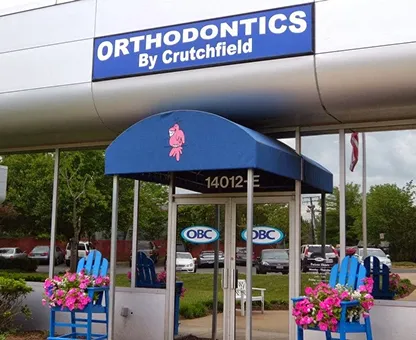
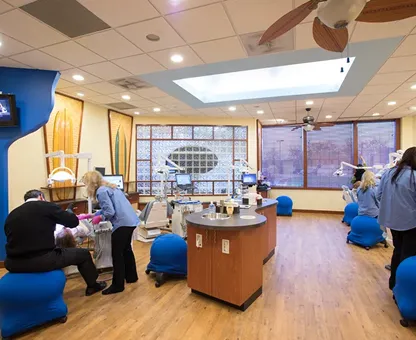
Step Inside Orthodontics By Crutchfield
From our welcoming office and dedicated team to advanced treatments and technology, here’s a glimpse of life at OBC.










Hours
Monday–Thursday: 8:30 AM – 5 PM
Friday: 8:30 AM – 12 PM
Saturday–Sunday: Closed


Orthodontics By Crutchfield delivers personalized orthodontic care using advanced technology, expert techniques, and a patient-focused approach for a confident, natural smile.


© 2026 Orthodontics By Crutchfield | All Rights Reserved | Privacy Policy | Digital Marketing by Remedo